

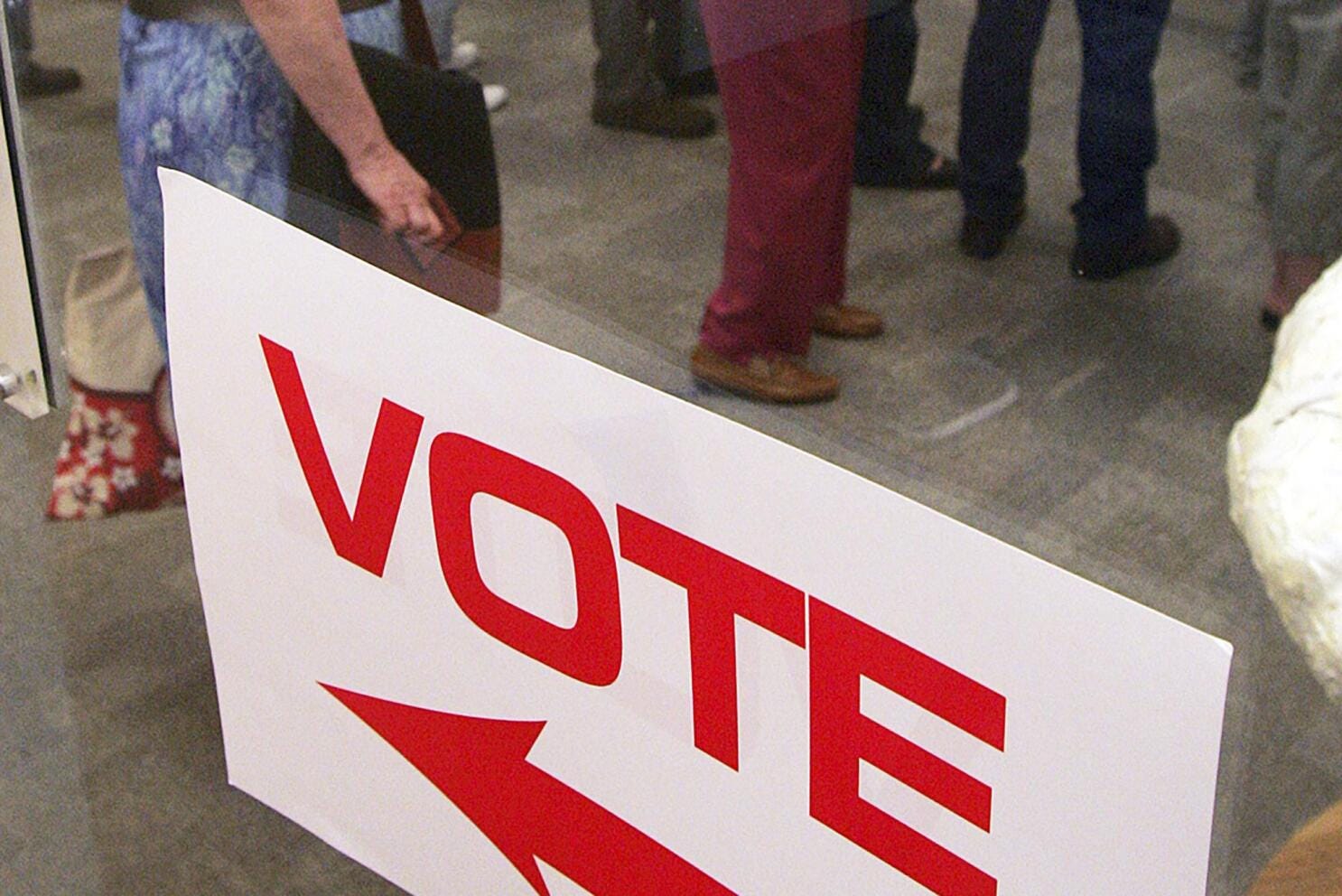
Early voting has begun. It’s far too early to tell much about what is happening. That said, the first day of in-person early voting saw a 46% increase over 2022. That should be a good sign for Democrats.
In this election, higher turnout will be better for Democrats. As I wrote earlier, Republicans are consistent, voting about 58% of their registration. Democrats are the most inconsistent. In 2018, they voted at 54.5%, and in 2022 only 51%. Yesterday, they made up almost half of the in-person votes cast—47.5%. That’s a healthy start.
There are two things to consider while watching the votes. Democratic registration has been dropping for several decades. It finally hit a floor, but there are far fewer registered Democrats today than there were just four years ago. So if the same raw number of Democrats shows up, it will take a much higher turnout rate.
In 2018, 54.5% turnout produced 1,466,238 votes from Democrats. The same number of votes today would require about 63% turnout. That’s not likely, and the second point is why.
Unaffiliated registration has increased pretty dramatically in recent years. Today, they make up almost 40% of registered voters. Democrats haven’t lost registration to Republicans. They’ve lost it to unaffiliated voters, many of whom still vote for Democrats even after shedding the party label.
According to the poll I discussed in a previous post, those unaffiliated voters are breaking for Democrats by 15 points. So a larger unaffiliated turnout probably adds to Democratic margins too. In 2018 and 2022, they voted at about 45%. If that number goes up, it’s probably good for Democrats.
Republicans, for their part, have been remarkably steady. They’ve made up about 30% to 31% of voter registration for the past two decades and they’ve turned out at 58% in both 2022 and 2018. For years, they benefited from unaffiliated voters—many of them former Democrats, others newcomers who arrived from up north supporting lower taxes, fewer unions, and less regulation.
Today, the growing share of unaffiliated voters leans more Democratic. Both Republicans and Democrats are aging. As they die, they are replaced by younger voters with less affinity for either party, but who skew Democratic in the voting booth.
Almost half of unaffiliated voters, 46%, are 40 or under. For comparison, voters 40 and under make up about 30% of Republicans and 34% of Democrats. Only 17% of unaffiliated voters are over 65, while 28% of Democrats and 29% of Republicans are.
In 2022, a strong year for Republicans, turnout among voters over 65 was up about 3 points over 2018, to more than 71%. Meanwhile, turnout among voters under 26 was down more than 5 points from 2018, and voters 26–40 were down almost as much. The more those younger voters show up this year, the better the year for Democrats.
So far, the people voting are mostly people who always vote. We won’t know much about trends for another week or so. The numbers to watch are Democratic and unaffiliated turnout, to see if they surge. Republicans are likely to vote like they always have, whether early or on Election Day.
Buckle up.

Lots of the voters I checked in yesterday at Durham;s South Regional Library were democrats or unaffiliated