

Even after the thumping they took this year, Republicans are on social media defending gerrymandering. They are making all sorts of arguments against fixing our broken system. There’s no way to draw fair maps. There’s no such thing as “independent.” Democrats would somehow cheat.
It hasn’t always been that way. Throughout the first decade of this century, it was Republicans who introduced bills that would make nonpartisan redistricting commissions part of the state Constitution. They introduced bills every session from 2005 to 2009. In 2009, fourteen members of the Republican Senate caucus, including then-Minority Leader Phil Berger, sponsored legislation that would have created a constitutional amendment.
GOP state Representative John Blust, who lost his seat this year and who has served in both the House and Senate, said at the time, “There is something fundamentally abhorrent to our system when politicians can get in the backroom and calculate by moving these lines along how to maintain their voters.” Another Republican, John Currant, said, “I don’t know of any one more important issue that needs to be addressed.”
So Republicans, be honest with yourselves (I know it’s hard, but it’s time, or you might nominate another Mark Robinson). If social media had been around in 2005 or 2006, you would all have been posting about the necessity of a constitutional amendment to end gerrymandering. That was the line of almost every Republican and conservative in the state. Think about that before you double down.
There’s always been bipartisan support for an independent redistricting commission. Common Cause of North Carolina has pushed for one. Former John Locke Foundation President John Hood called for a constitutional amendment to set rules and establish a commission system right after Republicans won their sweeping victory in 2010. Redistricting reform is not about partisanship. It’s about good government.
For those who let the perfect get in the way of the good, look at this year’s states with redistricting commissions. In a Twitter post, the head of data science at the site VoteHub wrote, “Fair maps held up extremely well in 2026, even in a strongly Democratic year. Generally drawn by courts or commissions, these maps all produced partisan splits largely in line with what you would expect from proportional maps.”
Nothing is perfect, but the system we have now is awful. It’s time to fix it.
Some Republicans argue that the election proves that gerrymandering is just an illusion. If it weren’t, they argue, Democrats would not have taken control of the North Carolina House and won so many Congressional districts.
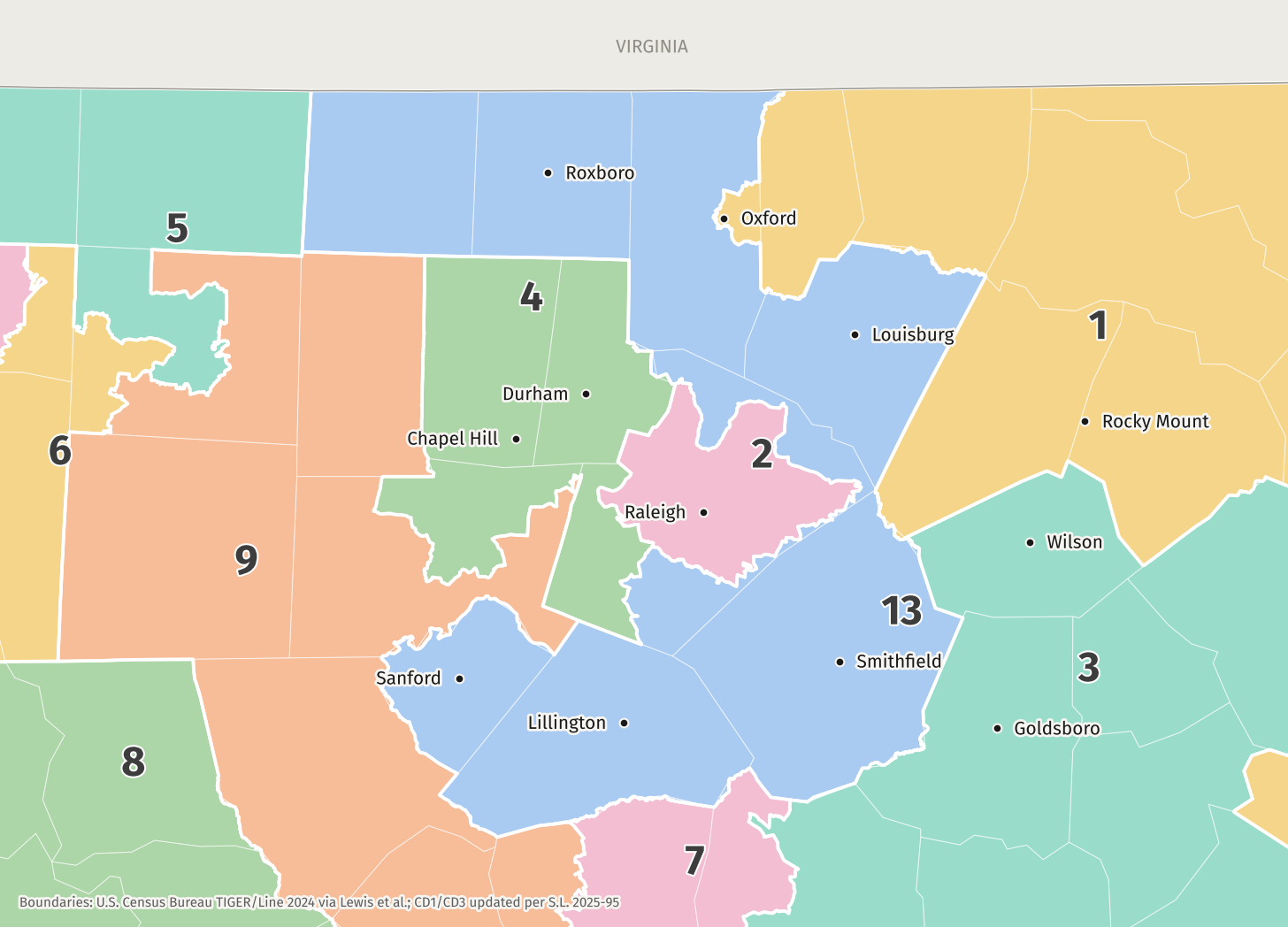
On the contrary, if gerrymandering were an illusion, Republicans would have lost the state Senate. They lost the statewide vote by 15 points and still held the chamber. What happened in the Congressional races shows the flip side of gerrymandering. Republicans got greedy. Trying to maximize their success in a normal election environment left them vulnerable to a wave like the one that hit.
Instead of protecting five or six Congressional districts with impenetrable margins, Republicans left the majority of their seats vulnerable. Had they left Guilford County out of Virginia Foxx’s district or Mecklenburg out of Tim Moore’s, they would probably both be going back to Congress. Of course, that would have meant drawing a couple of more competitive districts centered around Charlotte and Greensboro.
The GOP’s bet was actually a pretty good one. This year was the worst political environment for Republicans since Watergate. A 10-point swing would have left them with 10-4 or at worst 9-5, given the strength of Jamie Ager’s candidacy. In other words, gerrymandering works. It just has a breaking point.
In an evenly divided state with a sharp split between rural and urban areas, the state should have several safe Democratic and Republican seats with at least as many up for grabs every election cycle. Competition is good for politics and good for the country.
In North Carolina, we’ve been fighting over redistricting for 40 years. Both sides have complained about gerrymandering and sued in the courts. We’ve had our districts change constantly. We’ve had courts interrupt our elections. Voters have almost consistently been the losers. It’s time to stop it.
The coming legislative session is the best chance we’ve had to fix gerrymandering in almost 20 years. A divided legislature leaves uncertainty about who will be drawing maps in 2031. We can take the uncertainty out of it by putting a constitutional amendment to establish a commission on the ballot. We also have the advantage of seeing what works and what doesn’t in other states. We can craft the best option possible. Let’s get it done.
Thank you for a well written article on the topic of gerrymandering. I agree, it’s something that should be put in the trash bin of politics.
Go for it.
Congress could fix this for federal elections with a statute (something else for the new congressional majorities?), but state and local elections probably need local remedies.