

Last night, Roy Cooper squeaked by his opponents with 92% of the vote to capture the Democratic nomination for U.S. Senate in North Carolina. On the Republican side, more than 35% of Republican primary voters did not vote for Michael Whatley. Whatley thanked Donald Trump.
There were a total of 824,798 votes in the Democratic primary for Senate and only 610,850 in the Republican one. In the 2022 primary, 766,648 people showed up in the GOP primary that nominated Ted Budd and only 618,775 came out on the Democratic side. It probably doesn’t mean much, but I enjoyed writing it. Maybe it’s a measure of enthusiasm. I’ll take it as a sign.
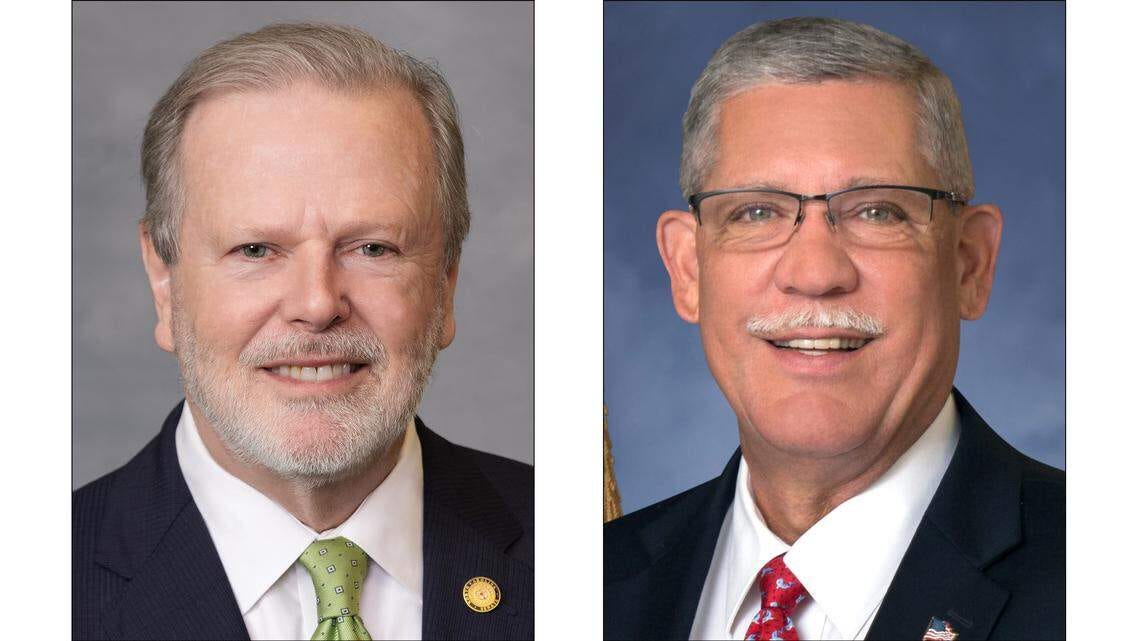
The real race was, and still is, in the GOP primary in Senate District 26 where Rockingham County sheriff holds a two vote lead over Senate President Pro-Tem Phil Berger. According to reports, Berger and his allies may have spent $10 million trying to fend off Page. That’s a staggering amount of money that would make it the most expensive primary in North Carolina history.
Berger only received 33% of the vote in Rockingham County, home of both candidates. He received more than 67% in Guilford. The provisional ballots will determine the outcome of the election. Expect a recount. We won’t know the outcome of this election for a long time to come.
I’m sure I’ll write more about this race but the outcome shows the limits of money. At some point, there were diminishing returns. Much of Berger’s money was wasted, but I doubt that’s the lesson anybody, especially Berger’s political team, will take away from the result. It will be interesting to see if he can replenish his war chest to help keep his colleagues hold off Democrats in a year that’s shaping up to favor them.
In the 4th Congressional District Valerie Foushee held off a challenge by Durham County Commissioner Nida Allam by just 1,200 votes. Outside groups spent heavily on both sides, blanketing Triangle airwaves. It would have been the most expensive primary in state history, except that Berger and his folks spent $10 million.
Foushee was able to hold enough of the traditional African American vote in Durham to dampen Allam’s margin. However, she won her home county of Orange by less than I’m sure she would have liked. Allam won Durham by 4.5% and Foushee won Orange by eight. Northern Chatham County delivered for Foushee. While it was the smallest part of the district, it gave her more than 62% of the vote and an almost 2,500 vote margin. Southwestern Wake County went to Allam by 822 votes.
I’m glad Foushee won. She’s been a reliable and consistent legislator and Member of Congress. That said, she should read the tea leaves. If the trends continue, she will lose in another primary in 2028, especially one packed with young people choosing a presidential nominee.
In other Congressional races, Jamie Ager won big in western North Carolina. He will challenge incumbent Republican Chuck Edwards in a district still struggling to recover from Helene. Ager has run a stellar campaign and brings a solid resume to the race. The DCCC has already put him on their Red-to-Blue target list.
In eastern North Carolina, Republican Laurie Buckhout will take on Democratic incumbent Don Davis in NC-01. Republicans redrew the district in an attempt to steal another seat and make Congressional races even less competitive. It always kills me that the party that lectures us about the virtues of competition doesn’t like to compete in the battle of ideas.
The big winner in legislative races was party discipline. Democratic House members who have been siding with Republicans to overturn Josh Stein’s vetoes lost big. Mecklenburg Representatives Carla Cunningham and Nasif Majeed couldn’t garner even 30% of the vote in their districts. Shelley Willingham lost in his northeastern North Carolina district by more than ten points. In another northeastern district, incumbent Rodney Pierce beat former Representative Michael Wray by almost 30 points. Wray had cut side deals with Republicans when he served. Finally, Amanda Cooke held onto the seat she was appointed to fill after Cecil Brockman resigned in disgrace for sexual abuse charges.
Cunningham, Majeed, Willingham, Brockman, and Wray bucked the party to cut deals with Republicans that benefitted either them personally or their districts specifically, often at the expense of core Democratic priorities. With them gone, Democrats have more leverage in the fight with the GOP. If Democrats pick up a few more seats in the general election, they will have a significantly stronger hand in the legislature, especially in shaping the budget.
Their defeats were a win for Josh Stein, House Minority Leader Robert Reives, and Democratic Party Chair Anderson Clayton. The losses send a message to members who might be tempted to break with their leadership when Republicans show up with goodies to buy votes. Primaries are the one leverage the minority party has to enforce discipline and party leaders used the discipline effectively.
I don’t mind legislators or Members of Congress who break with their party over deeply held beliefs or for their political lives, but the legislators who lost have just been rogue. Republicans have gerrymandered themselves power in the state legislature. Democrats may win statewide races, but to make that power effective in a state with a weak governor, the party has to stand together.
My overall impression of the primary is that the Democratic Party is in the midst of a generational transformation. It’s becoming more activist oriented, in part because of frustration with actions of the Trump administration and in part because of structural issues causing economic uncertainty. People want change. They are supporting people who promise something different.
I don’t think the change is a shift to the left necessarily. It’s a general frustration with the status quo that has been with us since the Great Recession and exacerbated by technological upheaval. People are looking for signs of hope. Their choice for change is a sign they are seeking optimism in the midst of deep pessimism.
In Texas last night, state Representative James Talarico defeated Congresswoman Jasmine Crockett to become the US Senate nominee in the country’s second largest state. In Maine, an oysterman named Graham Platner seems poised to defeat 77-year-old Governor Janet Mills, though that primary isn’t until June. In Michigan, a state Senator named Mallory McMorrow is leading a field that includes Congresswoman Haley Stevens, but there’s a long time between now and the primary in August.
In Texas, Talarico was probably the more conservative choice. In Maine, Platner is quite obviously the more progressive one. McMorrow is seen more as a fighter than the rest of the field. The difference is more about tone and approach than ideology. The American people want something different, so much so that they re-elected a conman to the presidency.
Democrats can ride this wave of angst and dissatisfaction to victory in 2026 and maybe 2028, but they better deliver something different if they want to hold any gains.
I would tweak that “but to make that power effective in a state with a weak governor” to read “but to make that power effective in a state with a weakENED governor”. Josh Stein isn’t inherently weak, but the OFFICE has been weakened by a venal Republican majority in the legislature. Other than that subtle difference, I agree with you though. This is one of those times where “we must hang together, or we will surely hang separately”.
I got my numbers later than you did apparently, because I have the total GOP Votes cast as 625,667. That was around 7:45 this morning, but the thing that really made my eye pop open was that Cooper didn’t just smoke the entire Democratic field with 92% of the vote, he smoked the entire REPUBLICAN FIELD BY HIMSELF — by over 133,000 votes (758,808-625,667). IF this is a preview of November, prepare to be back to our senators cancelling each other out lie they did for so long prior to 2014. (At least until we can get shut of Budd.)
I was okay with either candidate in the 4th, though I concur with your assessment that Foushee needs to read the tea leaves. I think she’s started to get the picture, because she’s dropped AIPAC, but there was a lot of AI money that fell from the sky in the latter days of the campaign. And if I’m honest, that race *may* not be over yet. I don’t see 1200 votes coming out of provisionals and mail ins, but there could be enough to trigger a recount.
And I can’t weigh in here without mentioning my favorite not-quite-as-dark-as-he-once-seemed horse, Richard Ojeda in the 9th. He won his primary by a comfortable margin, but *somebody* dropped a $600,000 money bomb into Hudson’s war chest, which is not something I’d expect to see happen with a well-entrenched incumbent in a “safe” district. But no amount of money can buy authenticity, and Ojeda’s getting his name recognition the old-fashioned way — street by street all across the district for the last year. I ran into him by random chance at the Dropkick Murphys show in Raleigh last month (in between opening acts) and while I was talking to him two other people recognized him and came up to talk to him. In Raleigh. I’ve said it before, don’t sleep on the 9th. And the 11th might be within reach as well.
Two votes! Unreal.
In Texas, my impression is that Crockett is more the rhetorical bomb-thrower than the extreme progressive. Talarico's style is much more sedate, but he's actually to the left of her on gun rights and openly savages billionaires, while she's not as focused on traditional class warfare. Crockett favors something along the lines of a public option for health coverage and Talarico backs universal Medicare. Stylistically, he probably would fare better than Crockett, and face it, a Black woman would face particular challenges anywhere in the South. I guess we'll see how the general goes, and who he faces.