

With the election now less than seven weeks away, polls are coming fast and furious. Almost all of them show Republicans facing strong headwinds caused by Trump and his policies. Voters are dissatisfied with the direction of the country and the hit to their pocketbooks from rising prices. Most prognosticators believe Democrats will take the House and have a good shot at the Senate.
Polls have taken a beating in recent elections. In 2024, they mostly had Harris winning, or at least didn’t have Trump sweeping the swing states. In 2022, most of them predicted a red wave that never materialized. We’ll find out soon whether or not they fixed the problems.
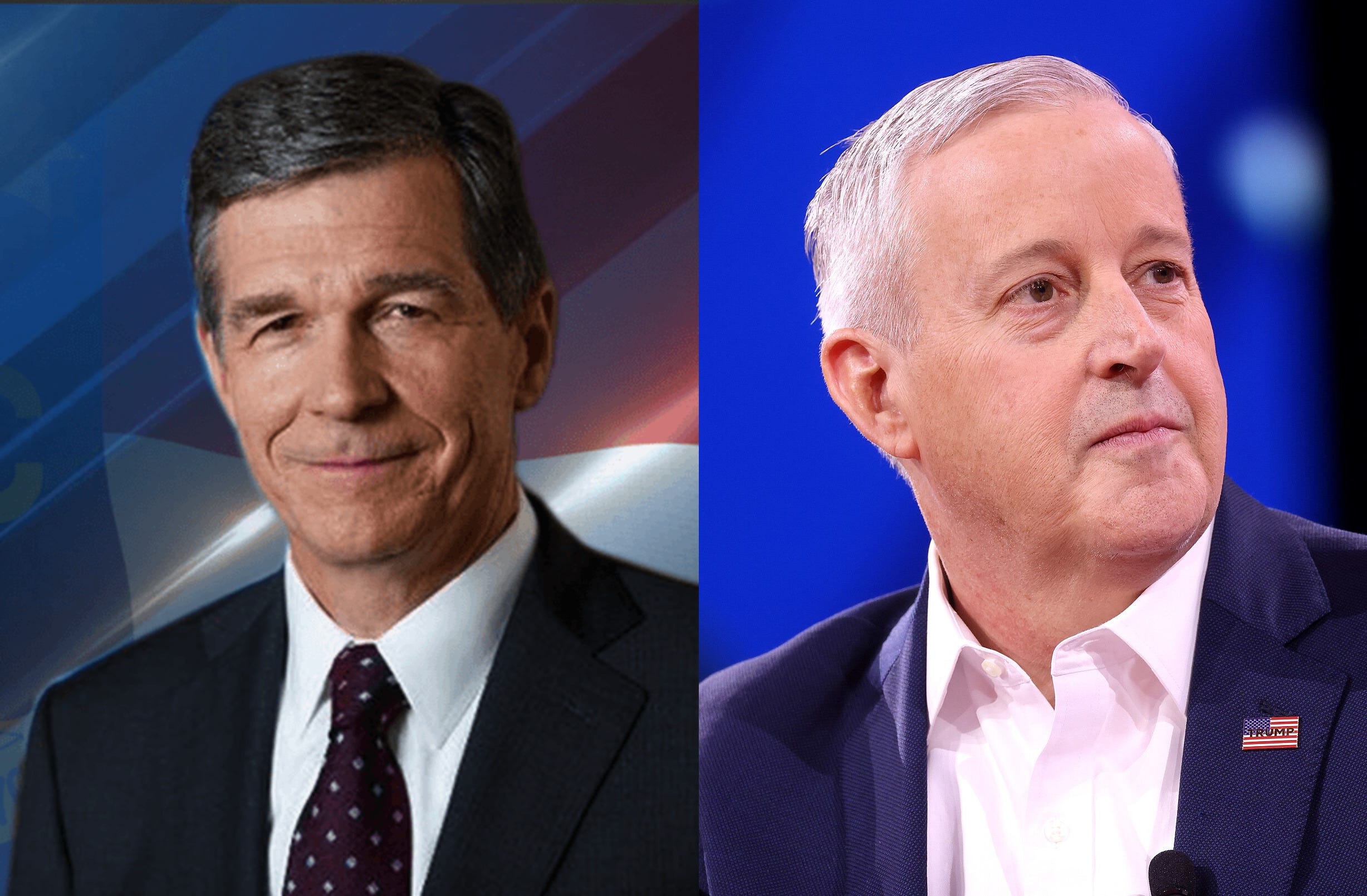
In North Carolina, Roy Cooper has led in every poll since the race took shape. The latest poll, by Republican pollster Trafalgar, has Cooper up by six, 48-42. Elon University has Cooper up by 11 points, 49-38, in a poll released last week. I suspect Cooper is closer to the six-point margin than the eleven-point one. Still, Whatley will struggle to close that gap considering Cooper’s consistent lead.
Republicans have been throwing a lot of mud at Cooper, but it’s not sticking. I suspect they’ve largely blown their wad. They hit him with their hardest shots and came up empty, mostly because they weren’t true and voters know it. People have been watching Cooper closely for more than a decade. Whatley’s asking them both to question their judgment and to believe they missed something obvious—that crime went out of control because of Cooper.
Instead of hurting Cooper, Whatley has likely damaged his own credibility with voters. If he was just making stuff up about Cooper in September, he’ll say anything going down the stretch. I suspect he’s done, and national Republicans will slowly start pulling out of North Carolina in October—maybe sooner if the environment continues to crater and they have to defend places like Texas, Iowa, and Kansas.
The dirty little secret about ads and money is that they can only do so much. The political environment is the 800-pound gorilla in any election. People vote the way they feel. Ads and money might move voters a couple of points, but they can’t shift the electorate by five or ten unless their opponents aren’t spending at all.
And that’s why these generic ballot numbers are so concerning for Republicans. Nationally, Democrats have an 8.6-point lead in RCP’s generic ballot average and 8.2 in Nate Silver’s average. So far in September, the generic ballot is getting worse for Republicans.
In these generic ballot questions, a small number of voters, 7 or 8 percent, are still undecided. They will almost certainly break for Democrats, giving them another point or so, because this election is a referendum on Trump. At the end of the 2018 election, the RCP average was D+7.3. The final result was D+8.4. Expect to see a similar dynamic this year.
When a cycle turns against a party, the mistakes start to pile up. In 2006, Republicans spent the whole year fighting the Abramoff scandals, two unpopular wars, and a botched Katrina response. Then, in late September, the Mark Foley scandal broke and drove the final nails into the GOP coffin. A party already on its heels couldn’t absorb one more blow. You can see the same thing starting now, with Republicans turning on each other over a Texas candidate attacking Indian-American Longhorn fans for supposedly replacing white ones. These are the self-inflicted wounds that turn a bad situation into a catastrophe.
In 2022, Republicans thought they would have a wave and might have if the court hadn’t overturned Roe v. Wade. This year, Republicans don’t yet have anything to offset the trend line. It’s probably not too late, but it’s getting there fast. If something doesn’t change the dynamic of the race by early October, Republicans should prepare for a shellacking.
I’m bullish on Democrats. I think Cooper will win and Democrats will control the House. I’m not sure about the Senate, but I wouldn’t be surprised. Every time I make these predictions, I get yelled at by people who worry Democrats will become complacent.
That’s not how it works. People want to be with winners. They don’t sit out an election because they believe they will win. Instead, they wish they could vote twice. Undecided voters will feel the momentum and go with the flow. It’s like watching your team in the finals of a tournament. You don’t sit it out because they are the odds-on favorite; you revel in every moment of victory.
And winning teams don’t just keep their fans—they pull in the bandwagon. The undecided break late, and they break toward the side with the wind at its back. That’s not complacency. That’s a crowd sensing which way a game is going and wanting to be part of it.
Tell the people that Democrats are winning. Get on board.
Roy Cooper may be benefiting from the candidate effect. Tom argues that the election is a referendum on Trump. If that were entirely true, Cooper's support should closely mirror the Democratic baseline. If Cooper is consistently polling well ahead of other Democrats, it suggests voters are rewarding him for his own record, reputation, and performance rather than simply voting a party ticket.
Candidate effect matters. It can be the difference between winning and losing a close election, especially in competitive states where a few percentage points can decide the outcome. Even in today's polarized environment, strong candidates can still persuade some voters to cross party lines.
I hope your feelings pan out.