

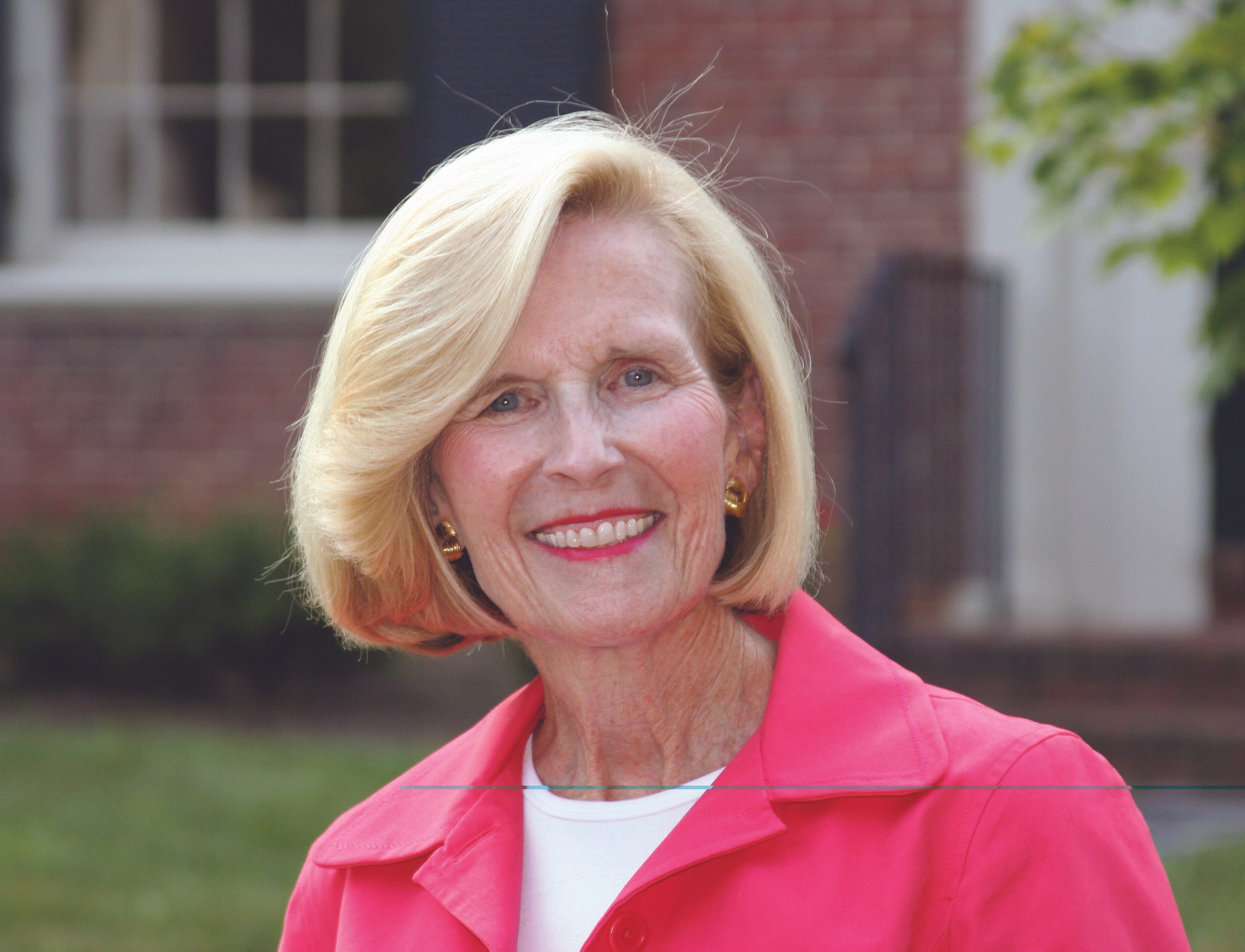
Back in 2005, I worked for a Virginia candidate named Katherine Waddell who had been a lifelong Republican. Her wall of fame included a who’s who of GOP and Virginia politicians from the latter half of the 20th century—Katherine with George H. W. Bush, Katherine with U.S. Senator John Warner, Katherine with George Allen, Katherine with Ronald Reagan. She had been a Republican stalwart and activist most of her life.
In the first decade of the 21st century, Katherine got crosswise with the party she loved. She was an old school, libertarian conservative who believed in personal liberty as much as she believed in limited government, low taxes, and less regulation. She led an organization called Republican Majority for Choice at a time when the GOP tent was shrinking. Abortion was a fault line and she was essentially banished from the Virginia Republican Party.
Katherine was a fighter, though, and refused to go quietly into the night. Instead, she ran as an independent for a House of Delegates seat held by a Republican culture warrior. She positioned herself as a traditional conservative who would stay true to her principles including keeping government out of the bedroom.
Democrats in the Virginia House caucus saw the potential. While they didn’t overtly support Katherine, they discouraged any Democrats for filing for the seat. Katherine got all of the Democratic vote in a year when voters were beginning to sour on George W. Bush’s tenure. She also won enough of the independent vote to narrowly defeat the Republican incumbent.
For the past 20 years, I’ve been looking for another race like that one. With filing beginning in North Carolina for the 2026 midterms, now might be the time. With the right circumstances, an independent could pick off a Republican seat for the legislature or Congress.
Candidate quality is the first ingredient. An independent candidate needs to reflect the broader values of the people in the district. The best candidate is someone with a background of working in the community who has earned the trust of local leaders by addressing nonpartisan problems or issues. An activist or former Democrat will have a difficult time. Voters will support a true independent, not someone easily portrayed as a wolf in sheep’s clothing.
Katherine raised the money she needed and put together a strong organization. She listened to her consultants and had a kitchen cabinet of veteran Virginia politicos. She brought strong instincts to the race and was opportunistic when she needed to be. She was a great candidate.
The district also matters. It should be lighter red than deep red. It needs to have enough likely voting Democrats that the independent candidate can win a solid, but not overwhelming, majority of the conservative-leaning unaffiliated voters. In North Carolina, that probably means districts with either a significant portion of relatively new residents to the state or an eastern North Carolina district with a substantial African-American population that has had its voting strength watered-down through gerrymandering.
Clearing the field is key. If a Democrat is on the ballot in the district, the independent candidate probably can’t win. Voters, especially today, are instinctively partisan. If they have a choice to vote for a Democrat, most registered Democrats will choose that candidate, stealing votes the independent needs to win. Voters tend to think emotionally, not strategically.
Finally, the political environment needs to be helpful. When Katherine won in 2005, lieutenant governor and former Richmond Mayor Tim Kaine was the Democratic nominee for governor. Republicans in Washington were dealing with the fallout from Katrina, the emerging Abramoff scandals, and wars in Iraq and Afghanistan that were going badly. Katherine unseated her Republican opponent by less than 50 votes, riding the coattails of Tim Kaine’s strong Richmond vote.
By 2007, the situation changed. Despite a successful first term in the House of Delegates, Waddell lost by almost 2,000 votes to a Republican opponent who held the seat for ten years. Without a strong top-of-the-ticket and larger turnout driven by statewide races, she couldn’t hold off the natural Republican bent of the district. Independents generally rent seats. They don’t own them.
As filing gets underway in North Carolina, Democrats need to be opportunistic. Several independent candidates are looking at running in Republican districts. Democrats should watch for quality independent candidates.
First, those independents need to get on the ballot. In North Carolina, independent candidates for legislature need the signatures of 4% of the registered voters in the district. For Congress, they need 1.5% of the number of voters in the district who voted in the last gubernatorial election. The deadline for signatures is noon of the primary election day, or March 3. These are difficult numbers to reach.
In 2024, I helped Shelane Etchison become the first independent candidate for Congress to get on the ballot in North Carolina. Signature collecting was a slog and required almost 50% more signatures than the 1.5% threshold to make up for signatures of people who weren’t registered or lived outside the district or whose signatures were illegible. We had a paid and volunteer operation running simultaneously. While the process was hard, it forced us to build an organization and helped Shelane connect to voters, listening to their concerns, frustrations, and hopes.
Candidates who succeed in attaining enough signatures to get on the ballot have passed the first test. They’ve shown the drive and organization to become a candidate. They’ve essentially won their primary against the process. Raising the money and appealing to a broad cross-section of voters is the next challenge.
The 2026 midterm is shaping up to be another tough environment for the GOP with sticky inflation, a souring jobs market, and emerging scandals in the Trump administration. Strong independent candidates in the right districts could pick off GOP seats. Democrats would be wise to clear the field after the March primary in solidly Republican districts where an independent has shown the fortitude to get on the ballot. Those independents might be able to beat Republicans in districts where Democrat are highly unlikely to win. It’s at least worth the shot.
Seems to me in this Red District 9 that the time is ripe for a "traditional" Republican to primary Trump-conjoined Richard Hudson. Shelane did a great job as an independent in the general election two years ago, but there must also be districts like this where the fight is really between the current (collapsing) Trump/MAGA versus the future Republican party, where a sane, moderate Republican would be preferred. Say a Republican Sen Mark Kelly!
I heard David Clayton speak last summer. He might be a candidate who would meet your criteria.https://www.clayton4nc.com/ After hearing him, my immediate thought was how do we get Democrats not to field a candidate.