

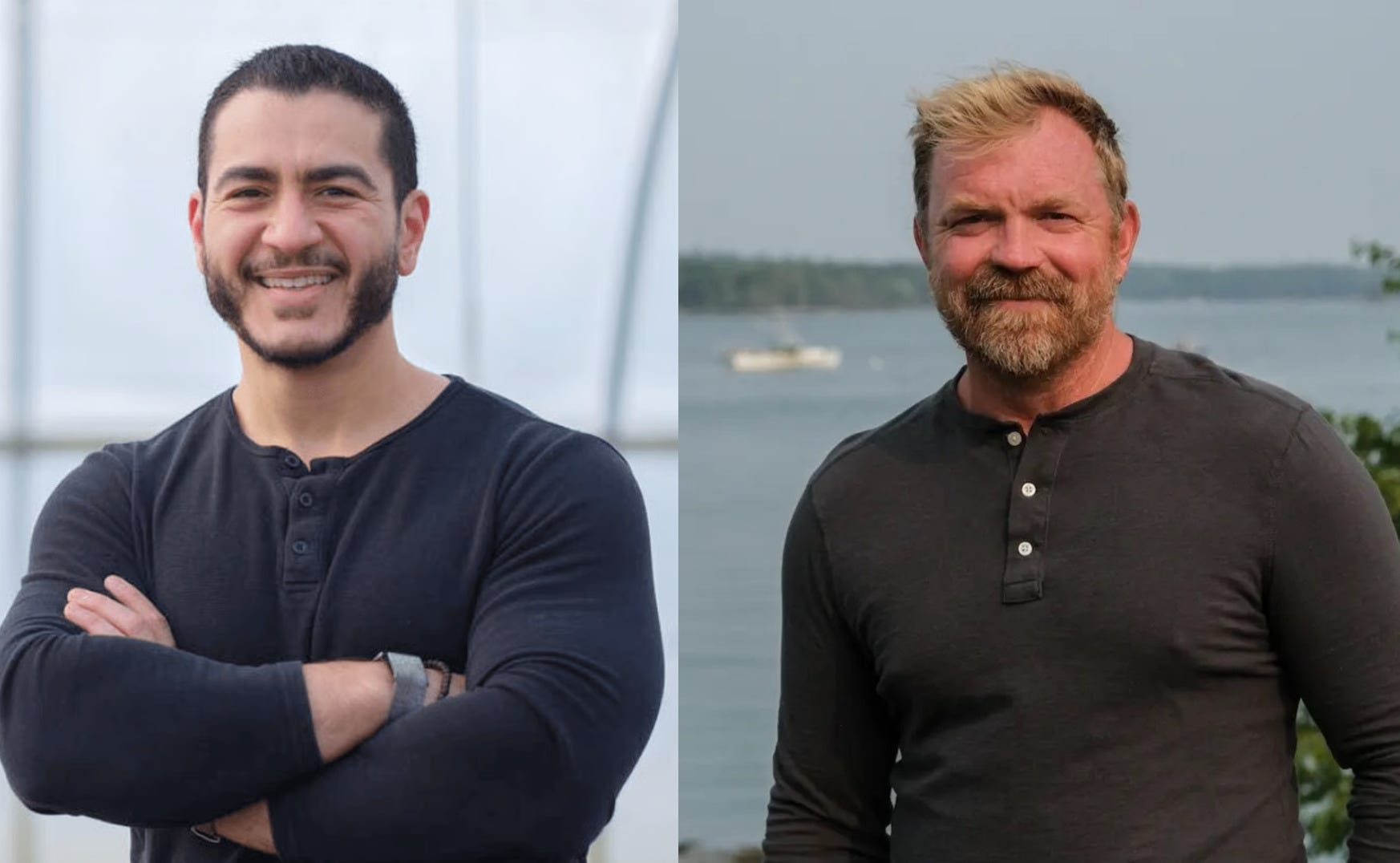
Thomas’s rule: In a Democratic wave election, don’t nominate candidates who make waves.
Late primaries in Maine and Michigan might determine whether Democrats control the US Senate or not. In Michigan, a three-way primary is shaping up to be a barnburner between a traditional pro-labor Democrat, a young progressive state senator, and an activist Muslim doctor with the support of Bernie Sanders. In Maine, Democrats are almost certainly going to nominate a first-time populist candidate with a long history of controversial actions and statements.
Democrats need to hold all of their Senate seats, including the one in Michigan, and flip four GOP states to win control. North Carolina is at the center of the battle where the Cook Political Report just shifted the race to “leans D,” favoring former Governor Roy Cooper over Trump stooge Michael Whatley. Other potential flips include Ohio, Alaska, Iowa, and Nebraska, where an independent candidate is giving the incumbent Republican a run for his money. Texas and Florida are even on the radar screen, but Maine should be the race where Democrats have the best chance.
The Maine primary is between Graham Platner and Governor Janet Mills. It’s a disappointing choice. Mills is a relatively unpopular governor who would be 78 years old when sworn in. It won’t matter, though, because Platner is leading her by massive margins. Maine had better choices but has left itself with two extremes — extremely old or extremely left-wing.
For his part, Platner seems to be a guy who likes applause and will say whatever is necessary to get it. He’s been all over the map, making outrageous, often offensive statements on the internet for the past fifteen years. He’s apologized for his rhetoric and the Nazi death’s head tattoo on his chest. I wouldn’t let a Republican get away with it, so I can’t really forgive Platner, either.
Platner has blamed women for sexual assault, saying they should not get drunk and sleep with people they don’t like. He’s called rural people racist and stupid. He said all police officers were bastards. And in 2021 he called himself a full-blown Communist. All of this baggage will come up in the general election when low-information voters who haven’t heard it yet will determine the outcome.
He’s staked himself out on the left side of the political spectrum in a state that is notoriously independent and moderate. While Platner will face Republican Senator Susan Collins, the state’s other senator is independent Angus King. Maine has a lot of traditionally conservative voters and no history of progressive governance, at least in the modern sense. We’ll see if they’ve been hiding.
Collins seems to go into every election cycle in trouble and yet comes out on top. She’s positioned herself as a moderate even though she reliably votes with Trump. Mainers might not like her, but I’m skeptical they will trade out a senator who sounds like a moderate for one who sounds like Bernie Sanders. Sanders lost the Democratic primary in 2020 to Joe Biden. We’ll find out if there’s really a silent progressive majority out there.
In Michigan, Congresswoman Haley Stevens started the race as the front-runner with the support of the state’s political establishment. State Senator Mallory McMorrow made a name for herself in the state Senate with a viral speech in 2022 that pushed back hard against Republicans accusing Democrats of standing with sex abusers. She’s built a strong campaign, wooing younger voters and progressive women. A public health doctor named Abdul El-Sayed has embraced the most progressive agenda and made opposition to Israel a centerpiece of his campaign, or at least that’s the way it looks from here.
If El-Sayed wins the nomination, I think Democrats will lose the state. Michigan still has a lot of blue-collar workers and rural voters who don’t trust the party. They’ve voted for Trump in two of the last three elections. El-Sayed may be able to win the nomination with thirty-something percent of Democratic primary voters but his ceiling will be very low.
Both Stevens and McMorrow would come across as more traditional Democrats in a general election, benefiting from the favorable political environment. Neither has intentionally courted controversy like El-Sayed, who has campaigned with Hasan Piker, the left-wing podcaster who said America deserved 9/11 and has said that he prefers Hamas to Israel. In states like Michigan, swing voters still matter and they generally aren’t very ideological.
I’m more bullish on Ohio and Alaska. Former Ohio Senator Sherrod Brown is a real left-leaning populist with a solid track record. He’s outperforming his Republican opponent, incumbent John Husted. Brown has double the cash on hand that Husted has and outraised him by more than 3-1 in the first quarter. Ohio has taken a beating under Trump.
In Alaska, former Congresswoman Mary Peltola is also putting together a strong campaign against Republican incumbent Dan Sullivan. She raised more than four times as much as Sullivan in her March report. She’s already won a statewide race for Alaska’s single Congressional seat and this time she’s got a favorable political environment to help her.
If Platner loses while Cooper, Brown, and Peltola win, Democrats will need to find a seat in considerably tougher states. Texas, Iowa, Florida, and Nebraska are next on the list. If Democrats lose Michigan, they will need to pick up two of those states, making a majority look very difficult.
Texas state Representative James Talarico seems to be a unique talent and if he faces ethically challenged Attorney General Ken Paxton, the race will certainly be on the national radar. Still, Texas hasn’t elected a Democrat in decades and Paxton won his current position despite a corruption trial with salacious allegations. It’s still a pretty red state. Iowa, Florida, and Nebraska are really tough.
The situation reminds me of Republicans in 2010. Despite the huge GOP wave, Democrats held the Senate. Republicans nominated a series of unelectable candidates in states they should have won. Remember Congressman Todd Akin who said women couldn’t get pregnant in a “legitimate rape?” Or Christine O’Donnell who ran an ad declaring “I’m not a witch?” Good times.
Waves only go so far and candidates matter. Swing voters matter in states where elections are determined by less than five percent. They will matter more in a wave election where low-information voters are prepared to vote against the White House in large numbers unless they are distracted by controversial candidates who make them think otherwise. I fear that Platner and El-Sayed are those types of candidates.
Here’s my bias about elections and the electorate. Not that much changes. Midterms are a referendum on whoever is in the White House. Six or seven months out from a campaign, voters will say a lot of things that will change. As the general election gets closer, they will come home. Progressives and liberals will vote for the Democrat. Conservatives will vote for the Republicans. Moderates and swing voters will choose the least risky candidate because they don’t really trust change, no matter how much they might want it.
So in Maine, they know more about Susan Collins than Graham Platner. They’ve been frustrated with her for years and, at this point in the election cycle, really want something different. By October, they might not like her any more than they do now, but they know who she is. They will just be starting to learn about Platner and his careening record. Whether they believe it all or not, Collins in comparison is the safer choice — the devil they know.
In Michigan, it’s simpler. McMorrow and Stevens threaten to split the traditional liberal vote while El-Sayed is trying to consolidate the most progressive voters. His ceiling is low and he will likely not survive a general election. McMorrow or Stevens would probably win on the strength of the wave, not a controversial campaign.
See my rule at the top.
Mills replaced a Republican troglodyte and has won the whole state of Maine in 4 consecutive elections now (2 as AG). I’d need to see some evidence for your dismissal. I think she’s been great Bernie Sanders is 5 years older than Mills. It’s his endorsement of Platner that sent the guy’s star rising. Here we see misogyny in its full glory, with a side of ageism. Ugly.
I think you are wrong on Platner. I think he beats Susan Collins.